Modern Farmhouse Style in Interiors and Architecture
A gabled roof, wood and a large table by the window: a familiar picture of modern farmhouse style. We look at what makes the home behind…
Read MoreMarble, granite, onyx and other stones for fireplace cladding: design options, material selection and completed RADEKA projects.
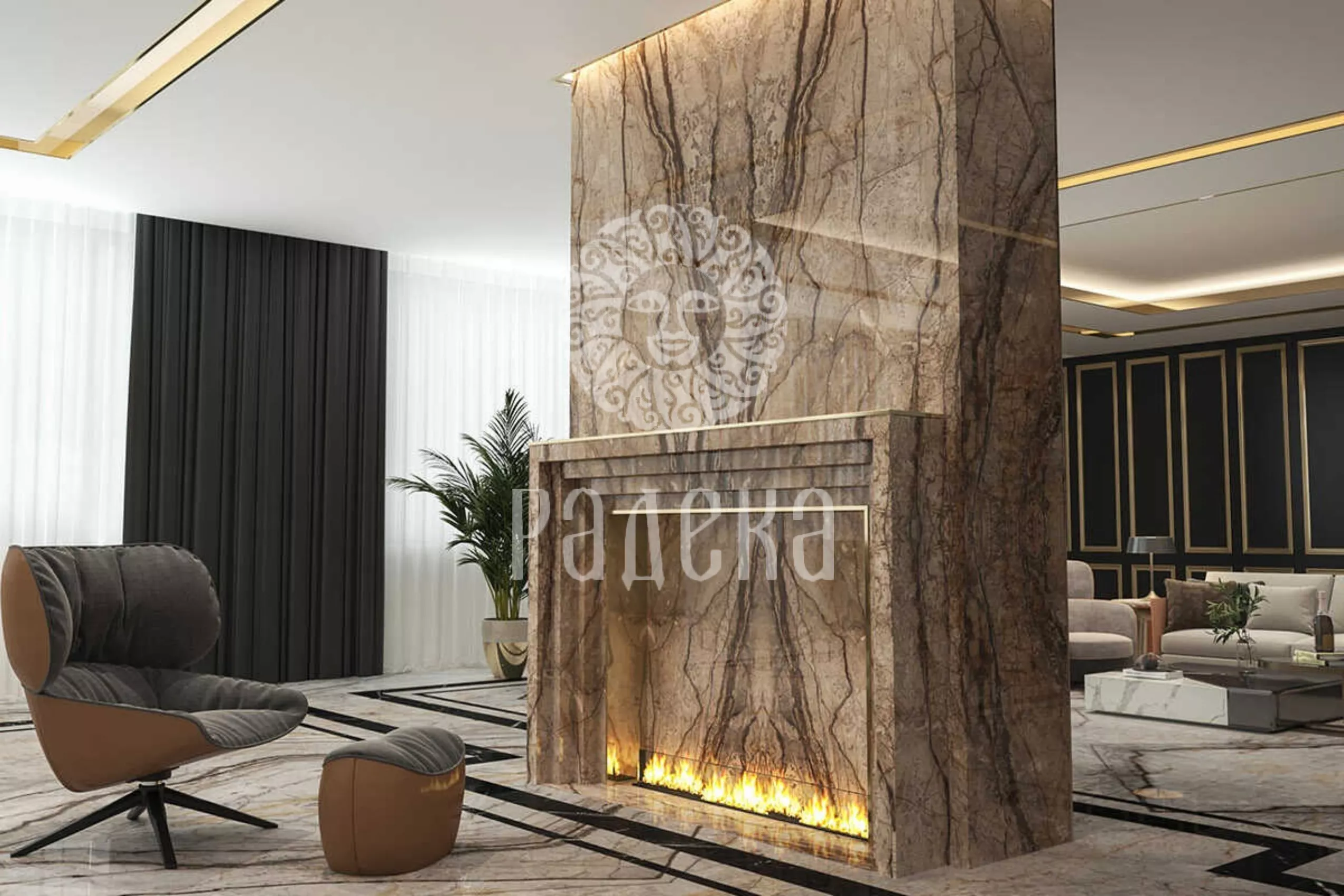
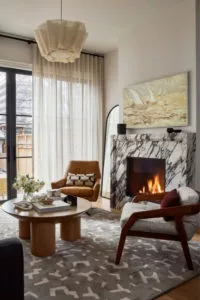
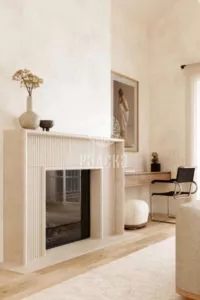
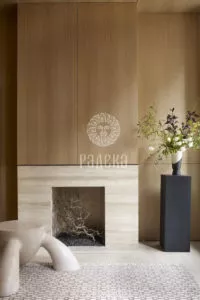
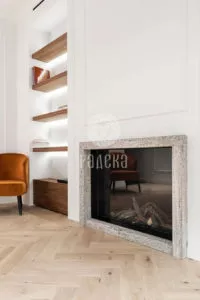
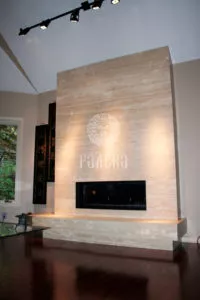
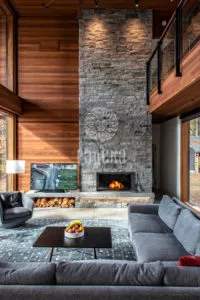
Natural stone fireplace cladding helps a fireplace become part of the interior, whether by defining the surround, framing the firebox or covering an entire feature wall. Bold veining, subtle colors and textured masonry offer different ways to shape the look of a living room.
Natural stone is used for fireplace cladding for its appearance and the ability of suitable materials to withstand heat in this application. The choice goes beyond the pattern: the properties of the selected stone, the firebox design, the temperature of the cladding and the installation method all matter. Stone cladding does not replace the insulation and protection required by the fireplace design.
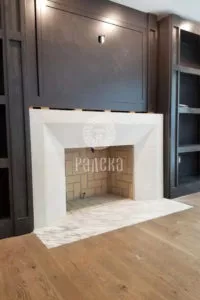
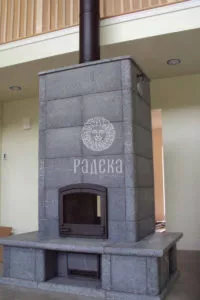
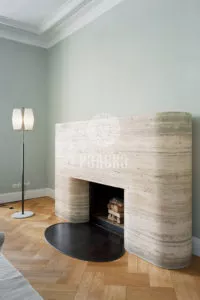
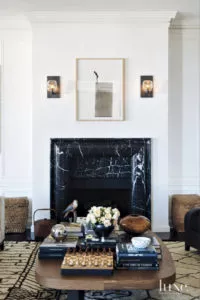
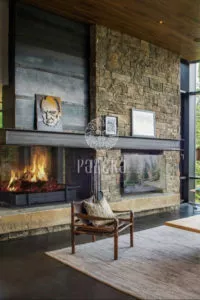
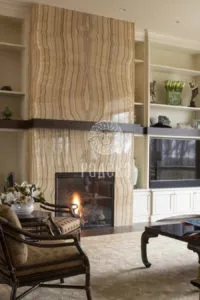
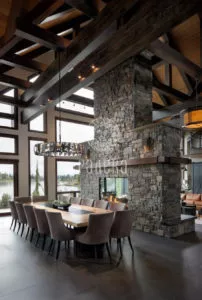
Cladding shapes the appearance of a fireplace, while its heating performance depends on the complete system. Fireplaces may provide radiant heat, warm the surrounding air or incorporate heat-storage components. The properties of a decorative stone slab should therefore not be treated as the properties of the fireplace as a whole.
Individual patterns. Natural veining, colors and textures allow the stone to be selected for a particular interior. The layout of large slabs should be agreed in advance, especially when a pattern needs to continue across adjoining pieces.
A choice of shapes and finishes. Stone can be used for simple frames, traditional surrounds, mantel shelves and tall fireplace walls. Polishing brings out the pattern, a matte finish creates a softer appearance, and a textured surface adds depth.
Long service life. Suitable stone can last for many years when properly installed and maintained. Some damage can be repaired locally or addressed by refinishing the surface, although the options depend on the stone and the type of damage.
Carefully planned joints. Large pieces can reduce the number of joints and create a more continuous pattern. Structural and movement joints still need to be retained where required by the design.
Weight and cost. The weight of the cladding affects the choice of support and fixings. Cost depends on the stone type and grade, the size of the pieces, edge detailing, pattern matching, delivery and the complexity of installation.
Service conditions. Natural stone is not immune to heat damage, stains or cleaning chemicals. The stone, adhesives, fillers and sealers should be selected for the particular part of the fireplace and used in accordance with the manufacturers’ recommendations.
Start with the fireplace design and its cladding requirements, then choose the stone and finish. The materials below offer different decorative qualities. The suitability of a particular slab or product for its intended location should be checked separately.
Marble
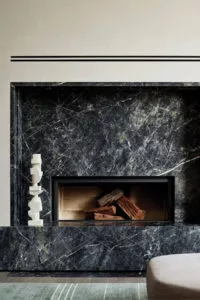
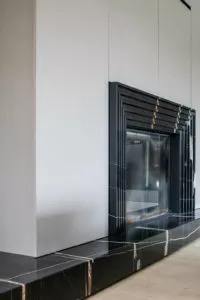
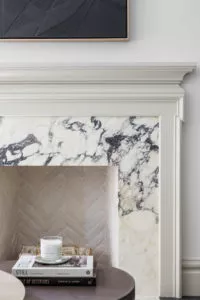
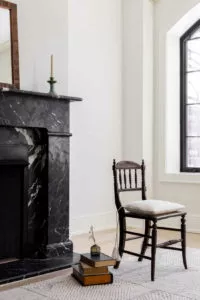
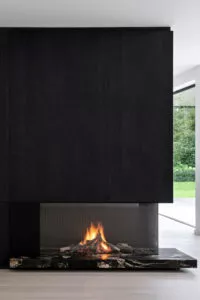
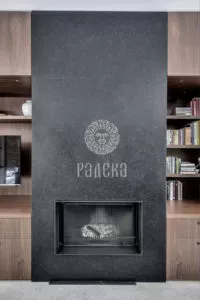
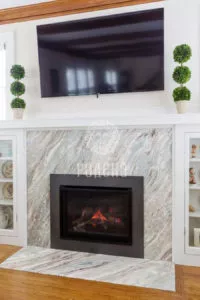
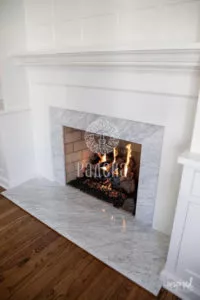
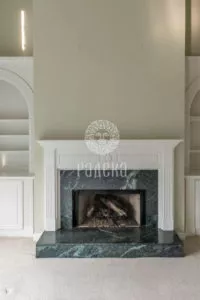
Marble is chosen for its expressive veining and variety of colors. It can be used for traditional surrounds or simple contemporary fireplace walls, with the patterns on adjoining pieces coordinated during layout. A polished finish emphasizes the depth of color, while a matte surface creates a more understated effect. Marble is sensitive to acidic cleaners, so care products should be suitable for the material.
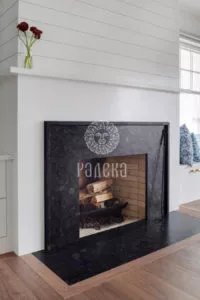
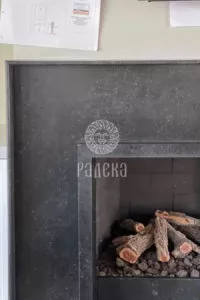
One example of RADEKA’s work is the marble fireplace in Mazilovo. Dark cladding with light veining emphasizes the geometry of the fireplace area. A photograph of the finished fireplace is available on the project page.
Onyx
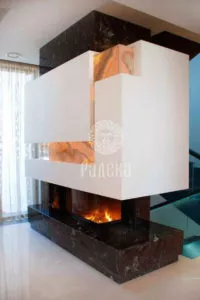
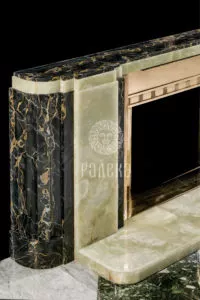
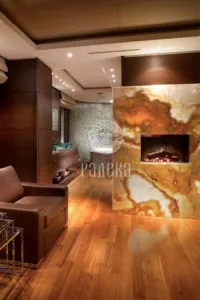
Decorative onyx is valued for its layered patterns and the translucency of some varieties. Backlighting can reveal the stone’s color and internal structure; the material does not glow by itself. In a fireplace design, the lighting, its position and its protection from heat should be planned together with the cladding. The effect depends on the selected slab, its thickness and the lighting arrangement.
Granite
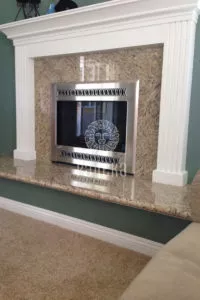
Granite is used for fireplace surrounds, mantel shelves and hearths. It offers a durable finish with anything from a fine-grained texture to a more pronounced pattern. For areas exposed to heat, the stone and installation method need to be selected together: temperature changes, the shape of the pieces and the joint design all affect the durability of the cladding. Read more about granite properties and applications in our separate article.
Limestone
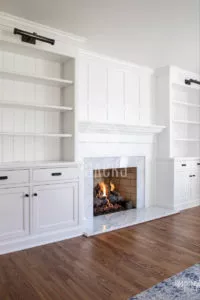
Limestone is often chosen for pale fireplace surrounds with a soft, understated texture. Depending on the material, the surface may be fairly uniform or contain visible natural inclusions. Density, porosity and finishing characteristics vary, so the stone should be selected using a sample and technical information. Acidic cleaners should not be used on limestone.
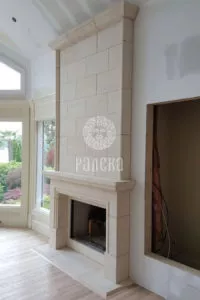
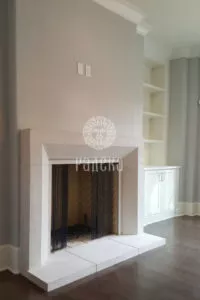
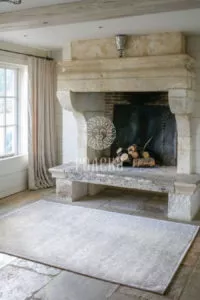
Shell Limestone
Shell limestone is a type of limestone containing visible shell remains. Its porous texture and natural pattern suit fireplace designs where a pronounced surface texture is part of the composition. Porosity and strength vary between materials. Selection should take account of cleaning requirements and any protective treatment, while suitability for the intended heat exposure needs to be checked separately.

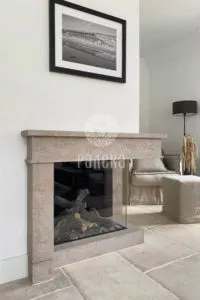
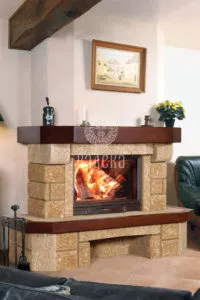
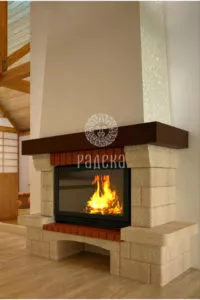
Travertine
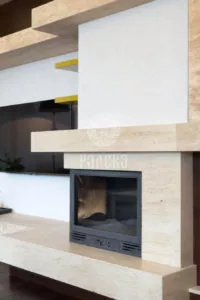
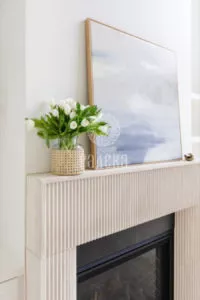
Travertine can create pale fireplace cladding with a banded or cloud-like pattern. Its appearance depends on the cutting direction and surface finish. The pores may be left open or filled; for a fireplace, the properties of the filler matter as well as those of the stone. The need for a sealer depends on the material, service conditions and the supplier’s recommendations.
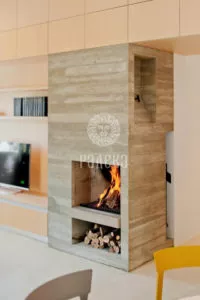
Sandstone
Sandstone is used where a granular texture, natural colors or a pronounced surface relief is desired. It works well in designs that combine stone with timber or large masonry elements. Sandstones vary in composition and properties, so performance cannot be determined from the rock name alone. The sample, supplier’s information and proposed fixing method should be reviewed for the project.
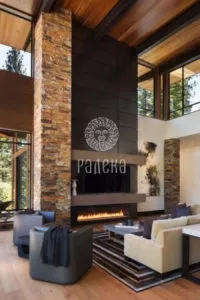
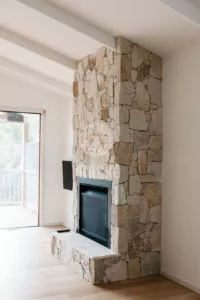
Slate
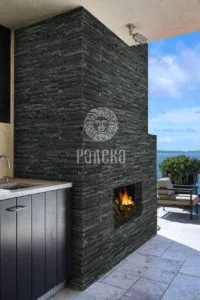
Slate can give fireplace cladding a distinctive layered texture. Narrow pieces emphasize horizontal lines, while larger slabs produce a more restrained surface. Material selection should take account of the properties of the particular stone and the condition of its edges: its layered structure calls for careful fabrication and installation. Cleaning methods should also suit the surface texture.
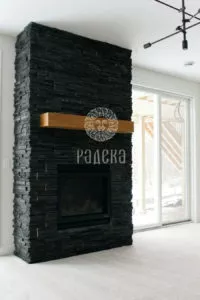

Soapstone
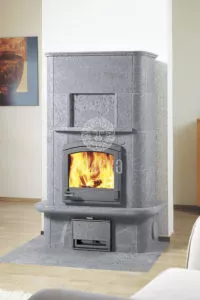
Soapstone is used for stove and fireplace cladding and in purpose-designed heat-storage systems. Suitable material tolerates heat well and can help store and gradually release it. The duration of heat release depends on the mass, design and operation of the complete system. Materials used in the firebox area must be specified by the design or the appliance manufacturer.
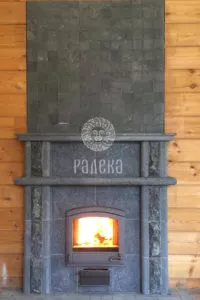
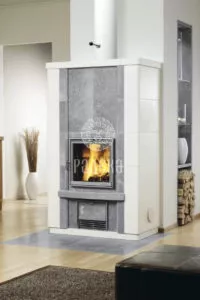
Before the cladding is fabricated, the fireplace insert is selected and its installation requirements are checked. The next steps are to determine the dimensions and weight of the pieces, joint positions, supports and fixings, along with the required clearances, insulation and ventilation. These depend on the specific fireplace, so there is no single installation detail suitable for every design.
The stone layout, edge finishes and junctions with the floor and walls are also agreed in advance. Adhesives, jointing materials, fillers and protective treatments must suit both the selected stone and the expected heat exposure. This helps combine the intended appearance with the fireplace’s operating requirements.
Clean the surface after the fireplace has cooled, using a soft cloth and a product suitable for the stone. Neutral cleaners are generally used for routine care; acidic and abrasive products can damage the finish. Ask the supplier whether a sealer is needed: it may reduce the risk of staining, but it does not make the stone stain-proof. Persistent soot, chips and damage to polished surfaces are best assessed by a stone restoration specialist.
Natural stone is also used in barbecue kitchens. In our barbecue kitchen in Barvikha, pale dolomite is paired with dark Brown Antique granite on the countertops and firebox surround. The kitchen is indoors, in a room with panoramic glazing and a transparent roof. RADEKA carried out the design, brickwork, flue installation and stone finishes. The project page shows the work in progress and the finished result.
RADEKA designs fireplaces and provides natural stone cladding. We coordinate the choice of stone, the pattern layout and installation details to suit the project. Learn more about our natural stone services on the service page. To discuss a fireplace for your interior, contact us and tell us about your plans.