
Turnkey Hammam
A hammam or Turkish bath is a steam eastern bath with high humidity that combines the luxury of physical and spiritual cleansing, as well as the joy of renewal. Guests are alternately lathered and rinsed with cool and warm water several times, followed by a massage with aromatic and nourishing oils.

A hammam is a place for leisurely relaxation: warm stone, humid air, soft light, and comfortable loungers. It can be part of a home spa area or a space for bathing procedures in a sports and wellness complex. Marble floors, loungers, and rounded sanitary ware attract with their beauty and aesthetics.
RADEKA carries out the design, construction, and finishing of hammams turnkey. We plan the layout, coordinate engineering solutions, select cladding, install equipment, and conduct trial runs. The scope of work is determined based on the specific room and the client’s wishes.
Hammam for Relaxation and Bathing Procedures
Hammams are chosen for their unique atmosphere. Here, one can sit peacefully on a warm bench, take a shower, and spend time on familiar grooming procedures. For some, it is a personal space to unwind at the end of the day; for others, it is part of home relaxation with loved ones.
Compared to a traditional Finnish sauna, the temperature in a hammam is lower, and the humidity is significantly higher. The feeling of comfort depends on the chosen mode, duration of stay, and individual tolerance to heat. Thermal procedures are not suitable for everyone: those with chronic illnesses and restrictions on such loads should discuss the possibility of visiting with a doctor.
In our project, we pay attention to what affects daily comfort: the shape of the seating, lighting, steam control, drainage, and drying of the room after the session.
Features of Turnkey Hammam Construction and Finishing
Humidity. In a functioning hammam, humidity can approach 100%. Therefore, even before cladding, protection of structures from water and steam is provided. Special attention is required for joints, corners, connections, and communication passages. Moisture-resistant finishing alone does not solve this task: a coordinated insulation system, drainage, and ventilation for drying the room are necessary.
Temperature. A hammam is characterized by moderate air temperature with high humidity. The working mode is chosen based on the equipment and operating conditions. Insulation helps reduce heat loss and maintain the specified conditions, while surface heating and the operation of the steam generator are coordinated with each other.
Condensate. Condensate forms on the ceiling and other surfaces of the hammam. The shape of the ceiling is designed to direct water and reduce dripping on people. This can be a dome, arch, or sloped surface. The result depends on the geometry, seating arrangement, and thermal engineering solution of the entire structure.
Steam. The steam generator is responsible for steam production, which is selected based on the volume of the room, its finishing, glazing, and operating mode. A place with suitable connection conditions and access for maintenance is pre-allocated for the equipment. It can be placed in a technical room or boiler room if permitted by the documentation of the chosen model. The position of the steam outlet is chosen to exclude its direct impact on seated individuals.
Furniture. Seats, loungers, and massage tables are shaped according to the layout and intended procedures. Comfortable height, back support, smooth transitions, and surfaces that do not retain water are important. Specialized thermal insulation elements based on polystyrene and other structures provided in the project can be used for the base. Strength, heating, moisture protection, and cladding are considered as a single system.
Water Heating. Water heating can be applied to the floor, walls, seats, and loungers of the hammam. The location of the circuits, the temperature of the heat carrier, and control are determined during the design phase. Heated surfaces must be comfortable to the touch, and their heating must be coordinated with the operation of the steam generator. Depending on the conditions of the facility, the project may also provide for electric heating systems.
Materials. For the finishing of the hammam, marble, other suitable types of stone, glass and ceramic mosaics, tiles, and porcelain stoneware are used. The choice depends on the interior pattern, surface shapes, operating conditions, and maintenance requirements. For the floor, suitability for barefoot walking in wet conditions is important; for loungers, comfort of touch is essential. The durability of the finishing is determined by the quality of the material, compatibility of installation compounds, execution of joints, and proper maintenance.
Hammam Design
We start with the room and the future usage scenario. How many people will use the hammam? Are loungers needed, or are sitting places sufficient? Are foam procedures (kharett), a separate shower, a changing area (jamekyan), and a relaxation area (ilyklyk) planned? The answers help determine the layout and equipment composition.
During the inspection, we check the dimensions and condition of the structures, the possibility of connecting water and sewage, available electrical power, ventilation, and space for the steam generator. In calculations, we consider the finished dimensions after insulation, cladding, and ceiling installation. The possibility of placing the hammam cannot be determined solely by the room’s area or ceiling height.
Working design connects the interior with engineering systems. At this stage, we develop the shape of the ceiling (dome, tubeteika, envelope, arch, etc.), the arrangement of benches and loungers, junction nodes, communication entries, and access to equipment. The design project and 3D visualization help evaluate proportions, finishing, and lighting in advance.
Engineering Solutions for the Hammam
Behind the external finishing is the system that determines the operation of the steam room. Its main elements need to be coordinated before the cladding begins.
- Protection from water and steam. We provide a continuous protective layer on enclosing structures, airtight joints, corners, and communication passages. Mosaic and grout do not replace waterproofing and limit steam transfer.
- Thermal insulation and heating. We choose the structure and heating system according to the project. Water or electric surface heating is coordinated with the steam generator and automation.
- Steam generator. We select equipment considering the volume of the room, enclosures, glazing, and operating mode. We provide conditions for its placement as indicated in the technical documentation, connection, and convenient access for maintenance.
- Ceiling and condensate. The ceiling shape can be dome-shaped, vaulted, or sloped. We design the geometry and seating arrangement to direct condensate and reduce dripping on people.
- Drainage and ventilation. We coordinate the slopes of surfaces, drainage, and protective layers. Air exchange is provided for procedures and subsequent drying, considering adjacent rooms.
- Electrical supply and lighting. We select equipment designed for steam room conditions. The placement of fixtures, connections, and electrical protection are determined in the engineering project.
Materials for Hammam Finishing
The interior can be light and calm, with large stone surfaces, or more decorative—with mosaic patterns, niches, and expressive lighting. When choosing, we consider not only the material pattern but also its suitability for a humid steam room, ease of cleaning, and installation requirements.
Natural stone is suitable for wall cladding, making seats, loungers, and individual details. Marble attracts with its pattern and processability, while decorative onyx allows creating elements with backlighting. The specific type and surface treatment are checked based on the conditions of use. For marble, we pre-select care products: acidic compounds can damage its surface.
Glass and ceramic mosaics are convenient for curved elements and patterns. Porcelain stoneware and ceramic tiles are selected based on the characteristics of the specific collection. For the floor, suitability for barefoot walking in wet conditions is important; for loungers, comfort of contact with the skin is essential.
Cladding, adhesives, grout, sealants, and the base must work together. When installing stone and mosaics, we coordinate the layout, joints, and deformation seams. The hygiene of the room depends on regular cleaning, maintenance, and drying, regardless of the chosen finishing.
Interior Solutions, Equipment, and Accessories for the Hammam
We select the shape and arrangement of seats and loungers, washing bowls—kurnas, shower systems, and accessories. In a spacious steam room, a central warm platform for bathing procedures can be provided. For a small hammam, it is more important to maintain a comfortable passage and sufficient seating space.
Lighting helps emphasize the shape of the vault, the texture of the stone, or the pattern of the mosaic. Niche and lounger backlighting, fiber optic “starry sky,” decorative panels, and glass elements are possible. Along with atmospheric lighting, we provide lighting that is convenient for inspecting and cleaning the room.
Lighting
Lighting is powered by a network with a voltage of 12-36 volts using a step-down transformer. Fiber optic lighting is the safest way to illuminate a hammam since optical fiber does not conduct electricity, only light. In addition to installing low-voltage moisture-proof fixtures, the hammam can be equipped with a fiber optic “starry sky” lighting system.
Starry Sky
This lighting on the ceiling of the hammam resembles a real starry sky. You can design the arrangement of the stars yourself. This lighting looks very impressive; possible options for the starry sky in a Turkish bath include twinkling with smooth color changes, a combination of twinkling and constant glow. Dim light, the haze of humid steam, and the twinkling of stars help immerse oneself in an atmosphere of mystery and tranquility.
Kurnas
This traditional washing bowl can be made of natural stone, clad with marble mosaic, or made of suitable metal. Kurnas can be corner, wall-mounted, freestanding, or built into a bench.
Shower System
A shower panel or separate shower in the hammam or eastern Turkish bath offers a variety of water procedures. Hydro massage relaxes muscles, relieves pain, and has a therapeutic effect on the entire body.
Mosaic Panels
Real artistic panels that will decorate curbs, walls, columns, and niches of the hammam with original patterns. Mosaic is an environmentally friendly material, ideally suited for finishing a Turkish bath.
Ergonomic Seats
Marble warm benches are a traditional feature of the bath. Turks call them chebek-tashi—”stone for the belly.” Traditional massage loungers are made of stone, used for foam procedures typical of eastern baths. Benches and loungers are also made of polystyrene, then finished with natural stone, mosaic, or ceramics. Additionally, heating and lighting systems are installed in the loungers. Seats finished with real stone help warm the joints and muscles.
Stained Glass
Stained glass is a composition of colored glass. Original stained glass is made using various technologies, but all look impressive. This is one of the classic yet unique ways to transform the interior of any room. Colored glass refracts and reflects light in a special way.
Steam Generator
It will make your stay in the steam room more pleasant, comfortable, and relaxing. The equipment can saturate the air with humid, light, and warm steam. The microclimate in the hammam largely depends on the power and characteristics of the steam generator, which is also used in the treatment of upper respiratory diseases.
Stages of Turnkey Hammam Construction
- Discussion of the task, inspection, and measurements of the room.
- Development of layout, design solutions, and visualization.
- Coordination of equipment, materials, scope of work, and estimates.
- Preparation of structures, installation of engineering systems and protective layers.
- Verification of hidden works and readiness of bases for cladding.
- Finishing, installation of glass, plumbing, lighting, and accessories.
- Adjustment of equipment and trial cycle with heating, steam supply, and drying.
The sequence of individual operations is clarified in the project. Before handing over the hammam to the owner, we check the operation of the agreed modes, drainage, and access to serviceable nodes.
What Affects the Cost of a Hammam
The cost of constructing a hammam consists of room preparation, design, engineering systems, equipment, and finishing. It is influenced by the ceiling shape, amount of glass, sizes and design of loungers, selected stone or mosaic, and complexity of communications.
Therefore, the same floor area does not mean the same estimate. For preliminary assessment, the room plan, photographs, information about communications, and examples of the desired interior are useful. The exact scope of work and cost are agreed upon after inspection and development of solutions.
Maintenance and Modernization
We perform warranty and post-warranty maintenance of hammams and also consider tasks for the modernization of existing steam rooms. The scope of maintenance, deadlines, and conditions are fixed in the contract. The cleaning procedure for equipment and care for the finishing are determined based on established systems and materials.
Tell us how you envision your hammam and send us the room plan. We will discuss the layout, finishing, and engineering possibilities to prepare an offer for your facility.
Our Works
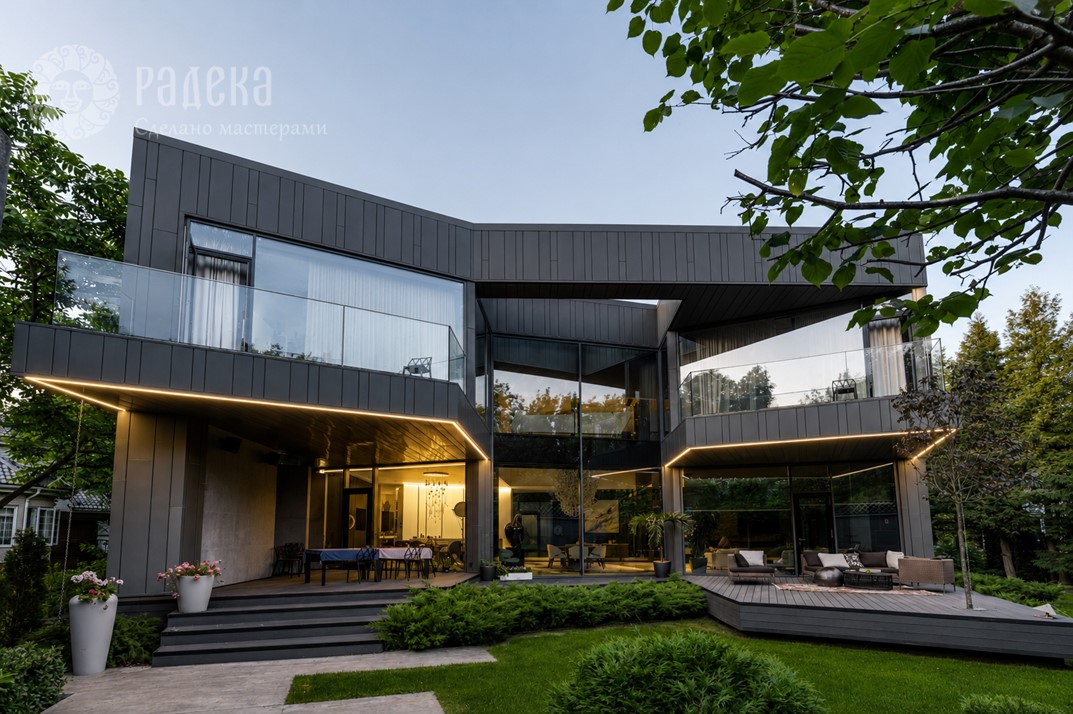
Facade work demands impeccable precision and a high level of craftsmanship. RADEKA specialists professionally install load-bearing structures, facade subsystems, thermal insulation, and cladding, ensuring reliability, precise geometry, and an expressive architectural result.
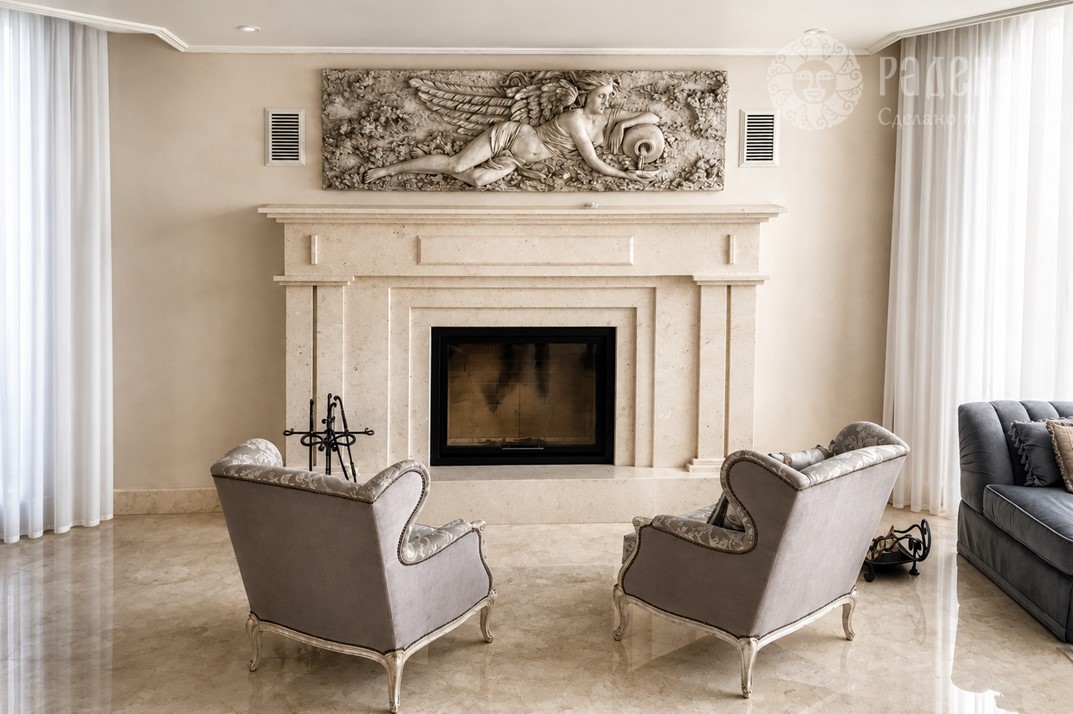
Our architects and craftsmen create interiors that are original in style, impeccable in taste, and refined in detail. We strive for individuality and distinction in every one of our projects.
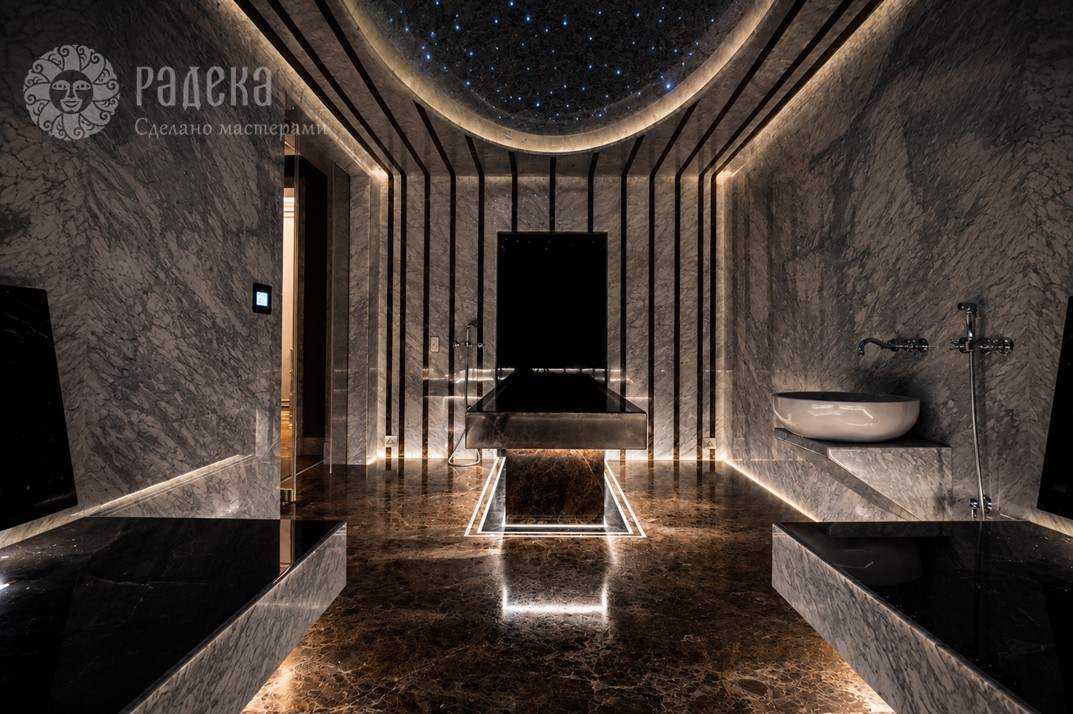
Our craftsmen can bring our clients’ boldest ideas to life in stone. We create unique stone mosaics, landscape properties, finish facades and interiors, and produce custom stone pieces.
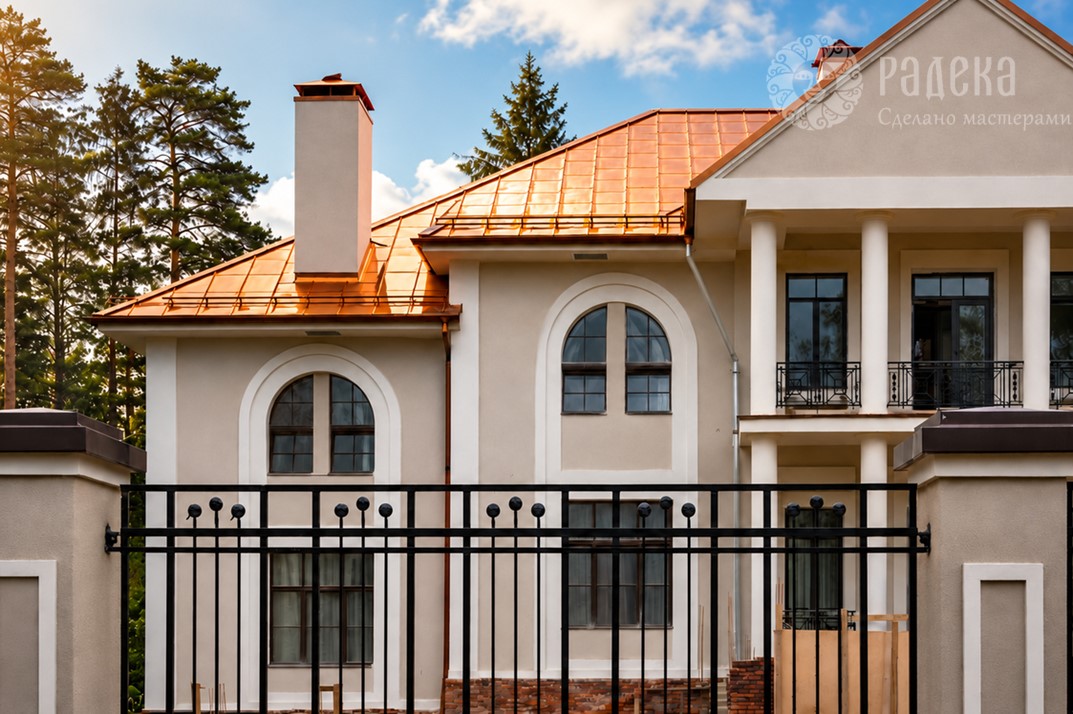
Our craftsmen can bring to life any roofing project, however complex. We not only carry out turnkey roofing work, but also manufacture every kind of thin-sheet metal roofing covering and accessory.