Foam Glass Gravel in Construction
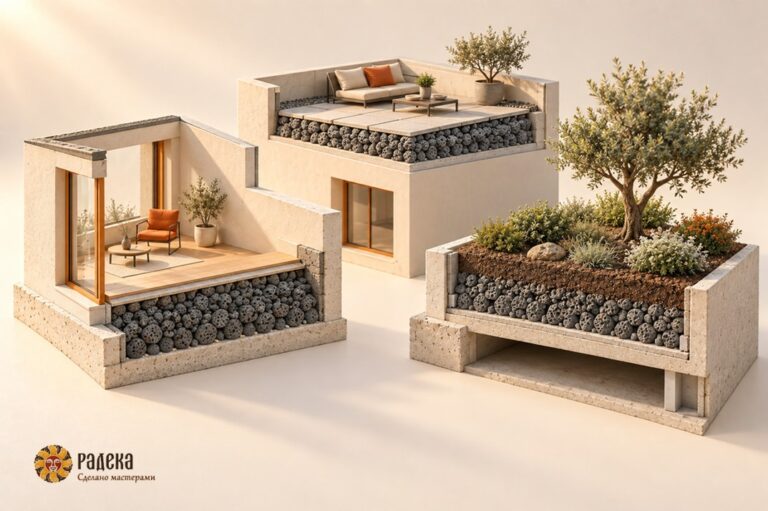
Foam glass gravel looks unremarkable: gray porous pieces, uneven edges, no decorative shine. Its function is usually not visible at all…
Read MoreLimestone care begins with understanding the causes of contamination. Why do efflorescence and dark streaks appear on the facade, what are the dangers of improper cleaning, and when is protective treatment needed? We discuss how to preserve the stone and check the quality of completed work.
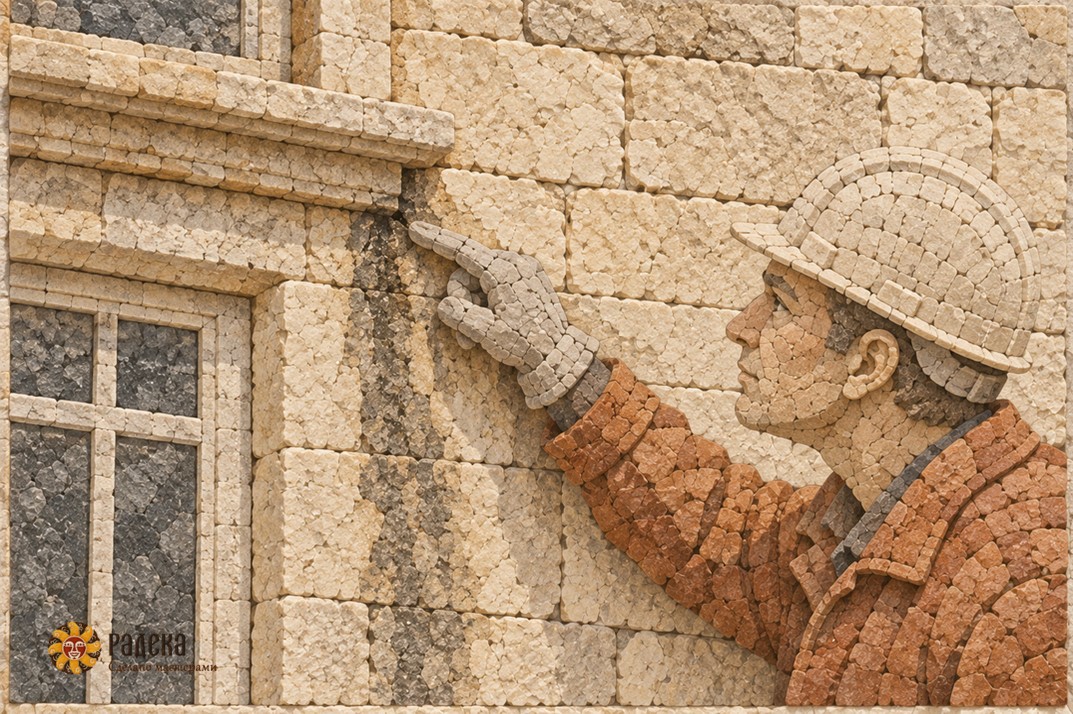
A whitish bloom has appeared on the light facade. It seems sufficient to use a “cement and efflorescence remover,” wash the stone, and apply a protective treatment. However, after such treatment, the bloom may change to dull spots, and dark streaks may return after the next rain.
Caring for limestone begins with identifying the cause of the changes. Contaminants are removed, the damaged surface is restored, and the source of constant moisture is eliminated. These tasks may occur on one facade, but there is no universal solution for them.
In the article about the history of limestone and its use on facades, we discussed the durability of the white stone. Here we will explore the practical side: how to choose cleaning methods, when hydrophobization is needed, and what to check before accepting the work. We will discuss modern facades and architectural decor; cleaning monuments requires a separate restoration methodology.
Before trial cleaning, it is helpful to photograph the entire facade and individual damages.
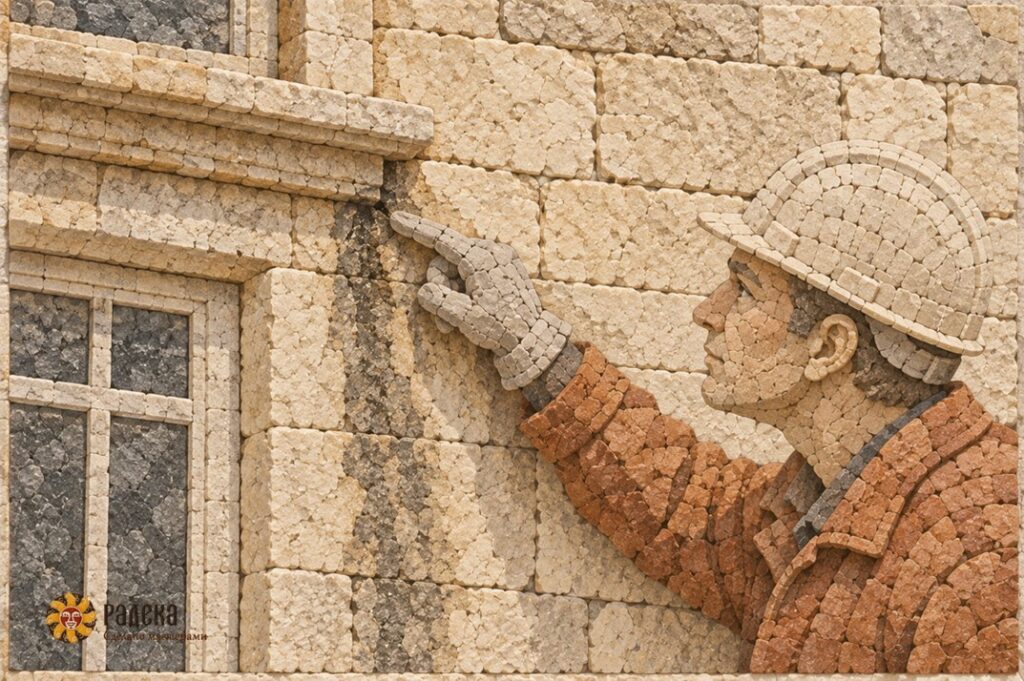
Note where the stains are located: under the cornice, near windows, along joints, or at ground level. Recall when they appeared — after installation, washing, applying the treatment, winter, or heavy rain. Such notes help verify assumptions rather than choosing chemicals based on the color of the contamination.
| What is Visible on the Surface | Possible Cause | What to Check Before Cleaning |
| Fluffy white powder | Leaching of soluble salts | Is there moisture, and does the bloom return after dry removal? |
| Dense white accumulations | Residues of mortar or mineral deposits | When did the bloom appear, and where does the water flow from this spot? |
| Dark areas after rain | Uneven moisture | How quickly do they dry compared to adjacent slabs? |
| Rusty or greenish streaks | Corrosion products from metals | Metal parts above the stain and the direction of runoff |
| Light matte spot after washing | Chemical etching or mechanical damage | Has the texture of the stone changed, and what was used for treatment? |
These are guidelines for inspection, not definitive diagnoses. For example, a whitish spot can be both a deposit on the stone and a change in the stone itself. In the latter case, intensified washing only exacerbates the damage. The difference between stains and etching marks is explained by Natural Stone Institute in their care recommendations.
Limestone is primarily composed of calcium carbonate. Acid reacts with it, so the cleaner may remove not only the bloom but also the surface of the cladding. Some manufacturers specifically warn that acids in their products can damage limestone. Matte marks appear on smooth stone, and areas with altered roughness appear on textured surfaces. The difference is particularly noticeable in side lighting.
Vinegar, citric acid, household descaling agents, and universal acidic cleaners for construction dirt are not suitable for regular limestone care. The label “for stone” is insufficient: a composition suitable for one type may damage another.
When choosing, one should consider not only the pH but also the intended use of the product, acceptable stone types, surface treatment, concentration, and contact time. A neutral cleaner is a reasonable starting point for ordinary dirt, but it does not guarantee the removal of cement crust, oil, or rust.
In professional cleaning, there are special acidic formulations specifically declared by the manufacturer for unpolished limestone. Such a product is chosen for a specific task after testing, not as a universal substitute for household chemicals.
If the streak reappears, it is necessary to trace the path of the water. Inspect the coverings of parapets, cornices, ledges, gutters, window joints, and the condition of the sealed joints specified in the project. At the base, check the drainage from the pavement, splashes, watering, and snow storage areas.
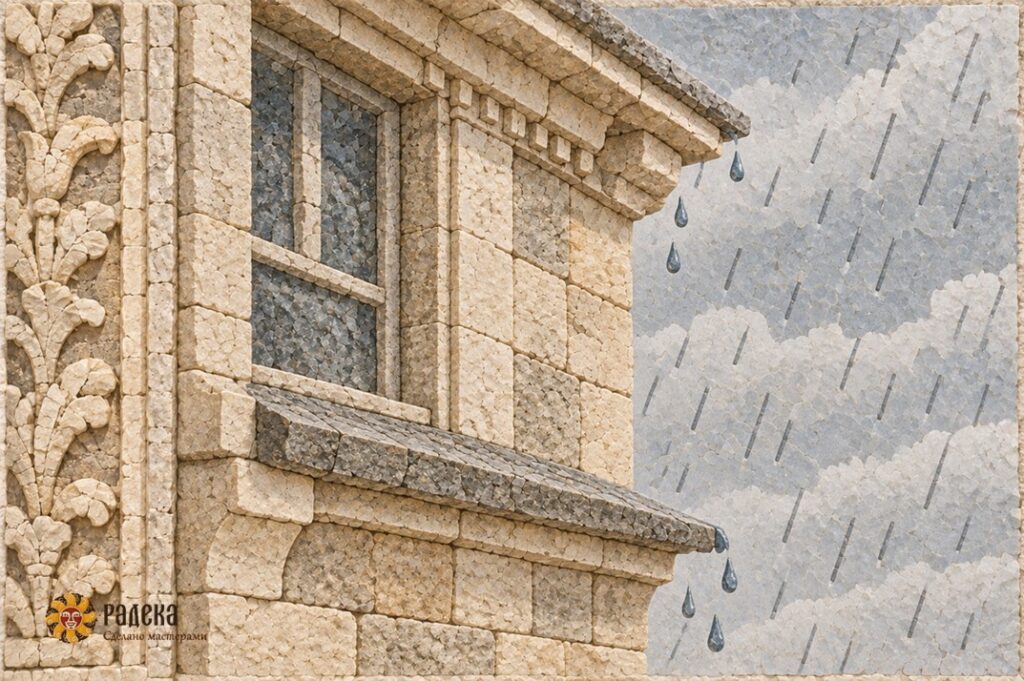
Moisture can penetrate inside the structure and exit far from the point of entry. Therefore, the boundary of the stain does not always indicate a defect directly behind it.
For a ventilated facade, the cavity behind the cladding and the intended water drainage are additionally important. One should not automatically declare every open joint as incomplete and fill it with sealant. There are systems with open and closed joints. The solution is verified according to the project of the specific building, maintaining the intended ventilation and drainage openings.
A moisture meter helps compare areas and observe changes, but its readings must be interpreted correctly. The result is influenced by the measurement principle, material density, salts, and surface condition. The number on the device’s scale cannot be presented as an exact percentage of limestone moisture without proper calibration.
If the slabs have shifted, new cracks, delaminations, or flaking have appeared, cleaning is postponed until the cladding and fastenings are inspected. In case of a risk of falling fragments, access to the hazardous area is restricted first. Treatment does not restore the load-bearing capacity of a damaged element.
The work begins with checking what exactly has been installed: the name of the stone and its origin, type of treatment, previous treatments, repair compounds, adhesives, and sealants. For old coverings without documentation, a sample may need to be analyzed.
Then, choose a discreet yet representative area.
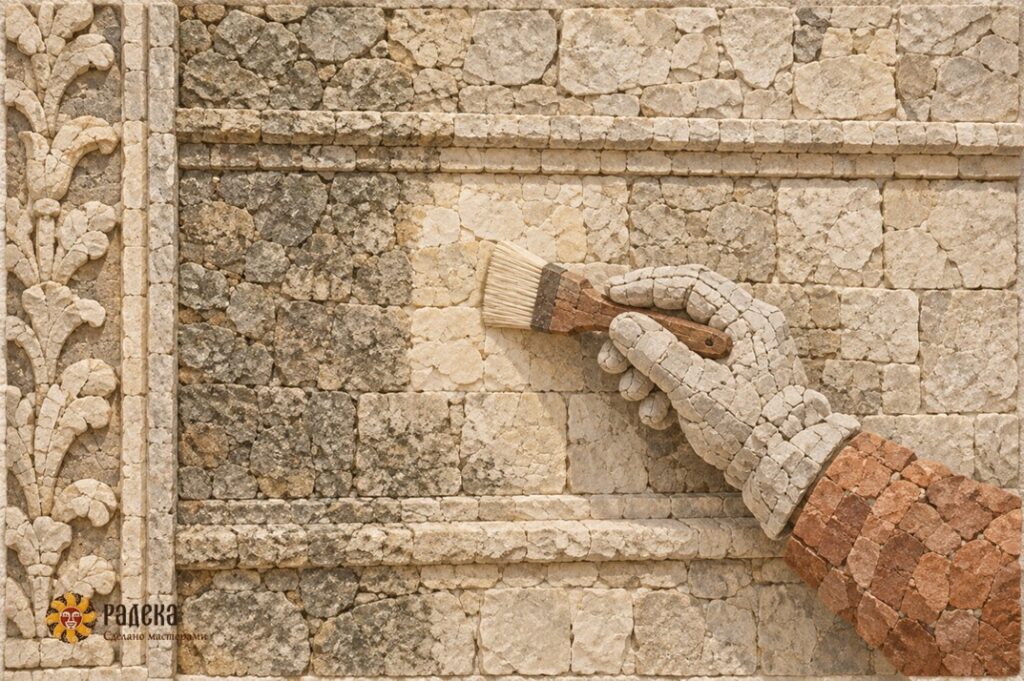
A test on a clean cut is useful for checking compatibility, but it does not replace testing on actual contamination. Different textures, repair inserts, and types of stains should be tested separately.
The test cleaning card should record:
Before work, protect glass, metal parts, sealants, and plants from contact with the composition and runoff. The method of collecting rinse water and safe access to the facade are also part of the preparation. Workers’ protective equipment should be chosen according to the safety data sheet of the chemical product.
The result is evaluated after drying, comparing the treated area with the original. Check not only the color: whether the texture, edges, and carvings have been preserved, and whether any stripes, gloss, roughness, or new deposits have appeared. The agreed area is left as a reference.
It is essential to agree in advance on the acceptable result. The requirement to “remove everything to perfectly white” should not mean removing a layer of stone. The natural heterogeneity of limestone will remain even after quality cleaning.
With an intact surface, start with the most gentle suitable test: removing loose dust, using a soft non-metallic brush, clean water, and a compatible neutral cleaner. Dirt and used solution should be removed, not smeared across adjacent slabs. Residues of the cleaning agent can also leave streaks.
It is better to prevent residues of mortar: protect the finished cladding and agree on the removal of contaminants during work. Once the mortar has set, the task becomes more complicated. A thick crust cannot be considered ordinary dirt and promised to dissolve with any “safe” means.
Manufacturers distinguish between cleaning acid-resistant materials and carbonate stone. For matte acid-sensitive surfaces, alkaline cleaning is considered. However, this does not mean that any alkali is harmless or that it will remove any cement accumulation. The composition of the contamination, texture, and removal method should be checked on-site.
Fluffy salt powder on a solid dry surface should initially be removed dry, gently, without damaging the stone. If it reappears, determine where the water and salts are coming from. Watering the facade to eliminate the white bloom is a poor criterion for success: salts can dissolve and reappear upon drying.
Bloom after the completion of wet construction processes is sometimes associated with the gradual drying of the structure. However, surface efflorescence and crystallization of salts within the pores are different situations. In the latter case, peeling and destruction of the surface layer may occur. Flaking requires inspection, and significant salinity may necessitate special desalination.
Here, it is essential to remove the source of contamination: a constantly rusting part or runoff from metal. Otherwise, the cleaned area will change color again. For ingrained stains, compresses with a selected reagent and absorbent filler are also used.
Selection requires caution: it is possible to create a halo, change the surface, or move the contamination deeper. A rust remover for plumbing does not become suitable for facades just because the stain is also reddish.
When the stone is overgrown, choose a preparation compatible with limestone and surrounding materials, and simultaneously eliminate conditions for constant moisture. There is no need to treat the entire wall “just in case” without identifying the contamination.
If the gloss, relief, or texture has changed after previous washing, additional chemicals may not help. The decision is made by a stone treatment specialist: local restoration, a broader area of finishing leveling, or replacement of the damaged element may be possible. For carved elements, it is especially important to preserve the profile.
The impact of the water jet depends not only on the pressure gauge reading. The nozzle, distance to the wall, water flow rate, exposure time, and condition of the stone are important. The jet can damage the surface, wash out joints, and drive water into the structure.
Therefore, there is no universal advice to “clean limestone at such-and-such pressure” for all facades. The mode is chosen based on testing and maintained during work. If particles of stone appear in the runoff, this is a reason to stop, not evidence of effective cleaning.
Wet cleaning is also not planned when there is a risk of water freezing in the stone. The forecast and drying time of the structure are considered, not just the positive temperature at the start of work.
Hydrophobic treatment reduces wetting and capillary water absorption through the treated surface. This can be beneficial for the facade when exposed to slanted rain. At the same time, the stone’s ability to dry is crucial: the selected composition’s impact on water vapor transfer, appearance, and compatibility with the substrate is assessed.
Protection against water, oil stains, and strengthening of deteriorating stone are different tasks. A standard hydrophobizer should not be considered simultaneously an oil-repellent treatment and a stone hardener. Moreover, it does not replace waterproofing of joints, proper drainage, or slab fastening.
The application of a protective composition does not make limestone acid-resistant. Even a treated surface cannot be serviced with a randomly chosen descaling agent.
It is also unwise to assign treatment to every facade solely based on the stone type.
On a wet wall with recurring efflorescence, one cannot simply add another protective layer. First, moisture, contamination, and the condition of the previous coating must be addressed. If water continues to enter the treated area, the surface treatment does not eliminate this path.
Often, the manufacturer of hydrophobic treatments requires a clean, dry substrate, removal of residues from previous cleaning, and prior elimination of construction defects. The inadmissibility of water penetration behind the hydrophobized zone is also specified.
Before choosing a product, it is advisable to request data on acceptable substrates and outdoor use, limitations on humidity, color change, water absorption, and vapor permeability. The statement “the stone breathes” without specifications does not explain how a specific cladding will behave. A small sample allows evaluating the appearance but does not prove the safe moisture regime of the entire wall.
For new cladding, there is another question: which sides of the slab are treated before installation. One cannot arbitrarily transfer surface treatment to areas involved in adhesion. There are special pre-treatment systems for which the manufacturer checks compatibility with the adhesive joint. Their use is coordinated with the installation system; the mere existence of such a product does not permit treating any stone with any composition from all sides.
Cleaning and treatment can be conveniently accepted separately. First, confirm the cleaning result on the dried stone, then the readiness of the substrate and adherence to the technology of protective treatment.
Pay attention to the timing: “dry to the touch” and “protection has gained properties” may indicate different conditions. For instance, for the mentioned Lithofin, full effectiveness is claimed after five days. This is the timeframe for a specific product, not a universal pause for all treatments. Temperature, acceptable humidity, and the moment of inspection are taken from the current technical data sheet of the chosen composition.
Drops forming on the surface indicate a change in wetting. They do not confirm the integrity of joints, the absence of moisture behind the slab, or the durability of the entire facade system. If instrumental control of water absorption is required, the method, comparison areas, and acceptance criteria should be agreed upon before the work begins.
It is useful for the client to receive:
Such a set allows understanding what has already been applied to the facade and what the next treatment should be compatible with after a few years.
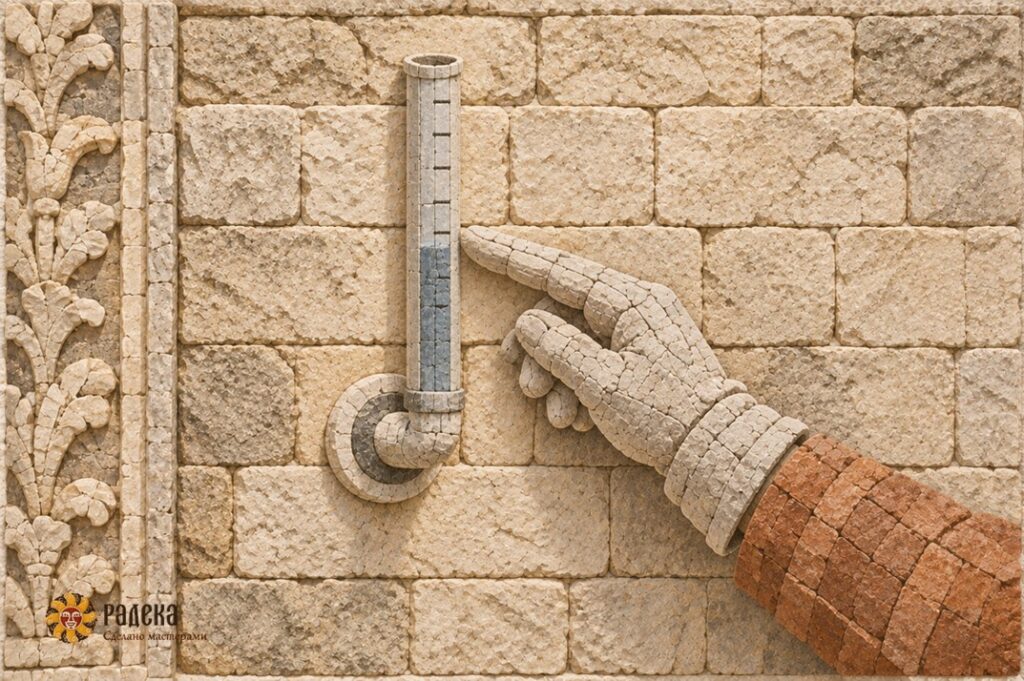
For operation, it is reasonable to plan inspections after winter and before the cold season, as well as after leaks or damages. This is a proposed monitoring scheme that should be refined for the object. It is helpful to repeat photographs from the same points: this makes it easier to notice the expansion of a stain, a new streak, or the opening of a joint.
Check not only the cleanliness of the stone but also the drainage, ledges, the condition of joints, and the intended water drainage paths. A repeat treatment is scheduled based on the condition of the protection and the requirements of its manufacturer. Automatically applying a new layer every year does not replace the assessment of compatibility and the need for treatment.
For a new building, these questions should be resolved at the design stage: how water will drain from cornices and the base, which details are accessible for inspection, how to maintain decor, and how to protect finished surfaces during subsequent work.
RADIKA performs natural stone installation and facade works. When discussing the project, it makes sense to connect the choice of limestone, fastening method, drainage, and future care in advance. Then the owner’s instructions continue the logic of the built facade, and cleaning helps preserve the material without unnecessary interference.